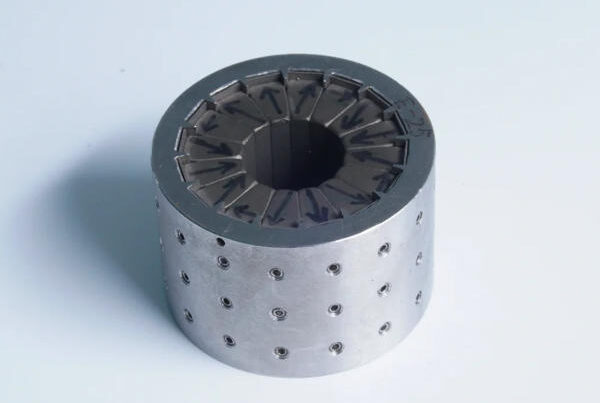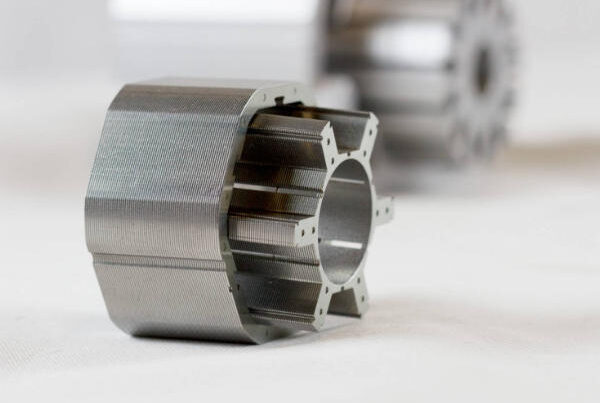

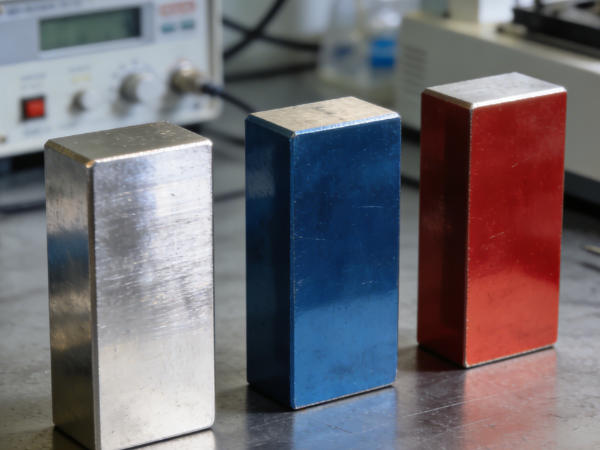
Permanent magnetic materials play a critical role in modern industry and are widely used in motors, sensors, medical equipment, aerospace systems, and renewable energy technologies. Among the various types of permanent magnets, Aluminum-Nickel-Cobalt (AlNiCo), Samarium-Cobalt (SmCo), and Neodymium-Iron-Boron (NdFeB) are considered the three most representative materials. Each offers unique advantages in terms of magnetic performance, temperature resistance, corrosion resistance, and cost.
Selecting the appropriate magnet material is essential not only for achieving optimal device performance but also for ensuring long-term stability and reliability. This article provides a systematic comparison of these three major magnet materials from the perspectives of material properties, magnetic performance, temperature resistance, and typical application scenarios.
I. Overview of the Three Magnet Materials
1. AlNiCo Magnets
AlNiCo magnets are among the earliest permanent magnet materials to be widely used. They are composed primarily of aluminum, nickel, cobalt, and iron. Since their development in the mid-20th century, AlNiCo magnets have been extensively applied in electronic instruments and motor systems.
The key advantages of AlNiCo magnets include excellent temperature stability, strong high-temperature resistance, and stable magnetic properties. Their Curie temperature can exceed 800°C, and their maximum working temperature can reach approximately 450°C or even higher. Additionally, AlNiCo magnets exhibit good corrosion resistance and typically do not require protective coatings.
However, AlNiCo magnets have relatively low coercivity, meaning they are more susceptible to demagnetization when exposed to external magnetic fields. Therefore, careful magnetic circuit design is necessary when they are used in environments with strong magnetic interference.
2. Samarium-Cobalt (SmCo) Magnets
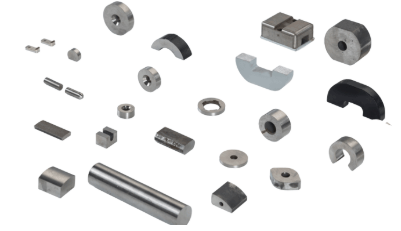
Samarium-cobalt magnets belong to the category of rare-earth permanent magnets and are composed mainly of samarium and cobalt. According to their chemical composition, they are generally classified into two types: SmCo₅ and Sm₂Co₁₇.
SmCo magnets are characterized by high magnetic performance, excellent temperature stability, and strong resistance to oxidation and corrosion. Their maximum operating temperature typically ranges from 250°C to 350°C, while some specialized grades can withstand temperatures up to 500°C. In addition, SmCo magnets offer outstanding resistance to demagnetization, making them ideal for use in high-temperature and high-magnetic-field environments.
The main disadvantages of SmCo magnets are their relatively high cost and machining difficulty. The material is also brittle, which increases the risk of cracking during mechanical processing.
3. Neodymium-Iron-Boron (NdFeB) Magnets
NdFeB magnets are currently the strongest permanent magnet materials available. They are composed of neodymium, iron, and boron. Since their introduction in the 1980s, NdFeB magnets have rapidly become the most widely used permanent magnets.
Their maximum energy product is significantly higher than that of traditional magnets, allowing them to produce strong magnetic fields in smaller volumes. For this reason, NdFeB magnets are often referred to as the “king of magnets.” They are widely used in electric vehicle motors, wind turbines, consumer electronics, and industrial automation systems.
However, NdFeB magnets have relatively poor corrosion resistance and typically require surface treatments such as nickel plating, epoxy coating, or phosphating. In addition, their temperature resistance is lower compared to the other two materials. The typical operating temperature ranges from 80°C to 200°C, depending on the specific magnet grade.
II. Comparison of Magnetic Performance
There are significant differences in magnetic performance among these three materials.
The first important parameter is the maximum energy product (BHmax), which measures the magnetic energy stored in the magnet. NdFeB magnets typically have a BHmax value of 30–55 MGOe, far exceeding that of AlNiCo (approximately 5–9 MGOe) and SmCo (around 20–32 MGOe). This gives NdFeB a clear advantage in applications requiring high magnetic strength.
Another key parameter is coercivity (Hc), which represents a magnet’s resistance to demagnetization. SmCo and NdFeB magnets both have high coercivity, whereas AlNiCo magnets have relatively low coercivity and are more vulnerable to external magnetic fields. As a result, AlNiCo magnets are better suited for applications with stable magnetic circuits and minimal magnetic interference.
The third parameter is remanence (Br). NdFeB magnets generally provide the highest remanence, followed by SmCo, while AlNiCo has lower values. This is one of the main reasons why NdFeB magnets are widely used in compact electronic devices.
III. Temperature Resistance Comparison
Temperature resistance is a critical factor in magnet selection.
AlNiCo magnets exhibit excellent high-temperature stability, with maximum operating temperatures exceeding 450°C. Their magnetic performance also changes relatively little with temperature, making them highly suitable for high-temperature environments.
SmCo magnets also demonstrate excellent thermal stability. Their typical operating temperature range is 250°C to 350°C, and their strong oxidation resistance makes them suitable for aerospace applications, high-temperature motors, and harsh industrial environments.
In contrast, NdFeB magnets have lower temperature resistance. Standard NdFeB magnets typically operate between 80°C and 120°C, while high-temperature grades can reach approximately 200°C. Even so, this remains lower than the temperature capabilities of AlNiCo and SmCo magnets.
IV. Corrosion Resistance and Mechanical Properties
In terms of corrosion resistance, both AlNiCo and SmCo magnets perform relatively well. SmCo magnets, in particular, have strong resistance to oxidation due to their high cobalt content.
NdFeB magnets, however, are more sensitive to humidity and oxygen and can easily oxidize if not protected. As a result, they usually require protective coatings such as nickel plating, zinc plating, or epoxy coating.
From a mechanical perspective, all three materials are considered brittle to some extent. However, NdFeB and SmCo magnets are particularly prone to cracking, so special care must be taken during machining and assembly to avoid mechanical stress and impact.
V. Typical Application Fields
Due to their different properties, these three magnet materials are used in different application areas.
AlNiCo magnets are commonly used in high-temperature instruments, sensors, measurement devices, and traditional motors, where stable magnetic performance under temperature fluctuations is required.
SmCo magnets are widely used in aerospace systems, high-performance servo motors, military equipment, and high-temperature sensors, where materials must maintain magnetic stability under extreme environmental conditions.
NdFeB magnets, thanks to their extremely strong magnetic performance, have become the dominant choice in modern industry and consumer electronics. Typical applications include electric vehicle drive motors, wind turbine generators, hard disk drives, smartphone speakers, and industrial robots.
VI. Conclusion
AlNiCo, SmCo, and NdFeB permanent magnets each have distinct advantages in terms of magnetic performance, temperature resistance, and application suitability.
NdFeB magnets offer the highest magnetic strength and are ideal for compact, high-power-density devices.
SmCo magnets provide a balance of strong magnetic performance and excellent high-temperature stability, making them suitable for extreme environments.
AlNiCo magnets, although lower in magnetic strength, offer outstanding thermal stability and are well suited for high-temperature applications.
In practical engineering applications, the selection of magnet materials should consider multiple factors, including operating temperature, magnetic field strength, environmental conditions, and cost. By carefully evaluating these parameters, engineers can achieve the optimal balance between performance, reliability, and economic efficiency.