
Con el cambio global hacia energías limpias y eficientes, Dispositivos de energía renovable como turbinas eólicas., sistemas de energía solar, and electric vehicle (EV) drive systems are experiencing rapid growth. In these devices, rotor magnetic assemblies serve as critical core components that directly influence efficiency, fiabilidad, and operational lifespan. Understanding their applications and optimization techniques is therefore essential for improving the performance of renewable energy equipment. This article provides a systematic analysis of rotor magnetic assemblies in renewable energy, covering working principles, selección de materiales, design optimization, and practical applications.
I. Basic Concept and Working Principle of Rotor Magnetic Assemblies
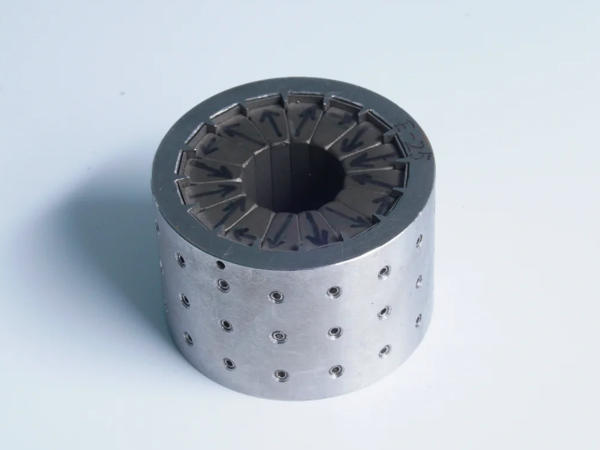
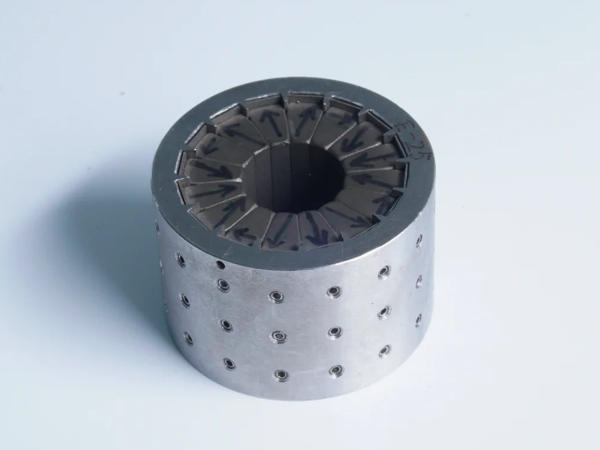
Conjuntos magnéticos de rotor are primarily used in motors and generators. Located on the rotor, these assemblies generate a magnetic field that interacts with the stator coils, enabling efficient conversion between mechanical and electrical energy.
Key structural components include:
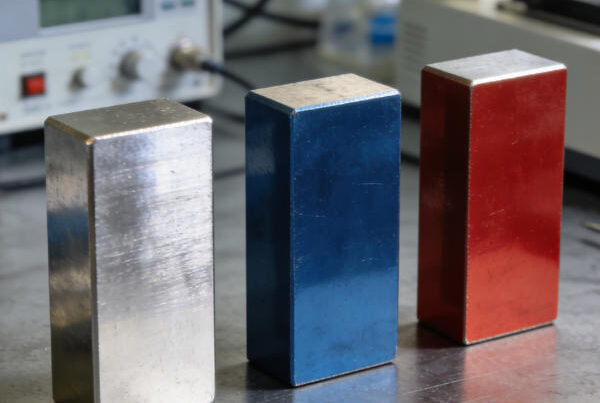
Imanes permanentes – commonly NdFeB, Smco, or AlNiCo, selected based on operating environment requirements.
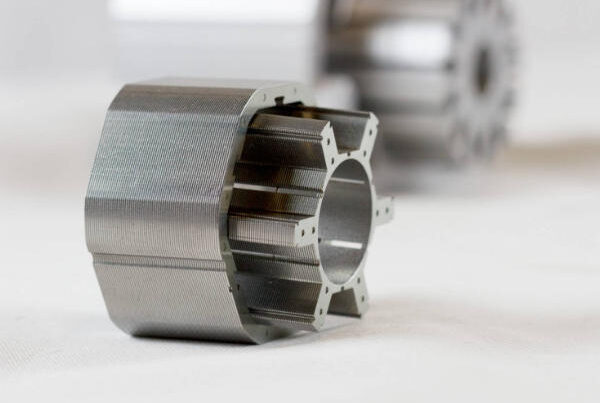
Rotor core – typically laminated silicon steel or soft magnetic alloys, providing magnetic circuit support and reducing magnetic reluctance.
Rotor housing and support structures – ensuring mechanical strength, dynamic balance, and protecting the magnets.
The working principle relies on electromagnetic induction and magnetic force interactions. When the rotor rotates, the permanent magnets generate a magnetic flux that cuts through the stator coils, producing an induced electromotive force (EMF). In motoring applications, current in the stator generates magnetic forces that drive rotor motion.
Compared to conventional wound rotors, rotor magnetic assemblies offer higher efficiency, tamaño compacto, faster response, and lower maintenance requirements, making them widely adopted in renewable energy equipment.
II. Main Applications in Renewable Energy Devices
1. Wind Turbines
Permanent magnet synchronous generators (PMSGs) with rotor magnetic assemblies have become mainstream in medium- to large-scale wind turbines.
Advantages include:
High power density, reducing generator size
High operational efficiency, minimizing energy loss
No external excitation required, lowering maintenance costs
Optimization focus: Selecting high-temperature resistant NdFeB or SmCo magnets to ensure stability under varying wind speeds and low temperatures; optimizing pole count and pole arc to minimize torque ripple.
2. Electric Vehicle (EV) Drive Systems
EV motors impose high performance requirements on rotor magnetic assemblies:
Stable magnetic field at high rotational speeds
Lightweight design to improve vehicle range
High thermal resistance and anti-demagnetization properties
In practice, surface-mounted permanent magnet (SPM) and interior permanent magnet (IPM) rotors are commonly used. SPM offers simple structure and high efficiency, while IPM provides higher mechanical strength and torque density.
3. Solar Tracking and Energy Storage Systems
In photovoltaic tracking and battery storage applications, rotor magnetic assembly motors provide precise positioning and efficient power transmission. High-precision rotor magnetic assemblies reduce power loss and improve system responsiveness, maximizing solar energy capture.
III. Optimization Techniques for Rotor Magnetic Assemblies
Optimizing rotor magnetic assemblies is essential to achieving maximum performance in renewable energy systems. Optimization can be classified into material selection, diseño estructural, y gestión térmica.
1. Material Optimization
Magnet material selection directly affects energy density, estabilidad térmica, and demagnetization resistance.
Ndfeb: High magnetic performance for high power density applications; requires surface coating to prevent corrosion.
Smco: Excellent thermal stability and corrosion resistance, suitable for extreme environments.
Alnico: Superior temperature stability and stable magnetic properties, ideal for long-term high-temperature applications.
Optimizing magnet pole arrangement, such as sinusoidal pole arc design, reduces torque ripple and improves efficiency.
2. Structural Optimization
Rotor structure affects both electromagnetic performance and mechanical stability:
Rotor core geometry: Using high-permeability materials and optimized slot designs reduces eddy current loss.
Magnet embedding method: Surface-mounted, interior-mounted, or hybrid structures, selected based on torque requirements and mechanical strength.
Equilibrio dinámico: Reduces vibration and noise, enhancing lifespan and operational stability.
3. Thermal Management Optimization
Long-term operation generates significant heat, which impacts magnet performance. Optimization techniques include:
- High thermal conductivity core materials
- Rotor cooling channels
- Selection of high-temperature resistant magnets
- Auxiliary oil or water cooling systems for large wind turbines
Effective thermal management improves both magnet and overall motor reliability.
IV. Application Optimization Cases
Case 1: Wind Turbine Rotor Optimization
A medium-sized wind turbine with interior NdFeB magnets optimized for pole count and pole arc achieved:
- 5% increase in generator efficiency
- 15% reduction in torque ripple
- 10% lower temperature rise under high wind speeds
Case 2: EV Drive Motor Optimization
An electric vehicle employing surface-mounted rotor magnets with an optimized cooling system achieved:
- 7% increase in driving range
- Improved high-speed stability
- Over 20% extension in motor lifespan
These examples demonstrate that through material selection, diseño estructural, y gestión térmica, rotor magnetic assemblies can significantly enhance system performance and reliability in renewable energy devices.
V. Tendencias de desarrollo futuras
As renewable energy devices move toward higher efficiency, higher power density, y sistemas inteligentes, rotor magnetic assemblies are expected to evolve in the following ways:
High-performance magnet materials: Development of high-temperature, high-coercivity NdFeB and SmCo magnets for extreme environments.
Intelligent design and simulation: Finite element analysis (FEA) to optimize magnetic flux distribution, torque characteristics, and thermal flow.
Lightweight and modular design: Reduce rotor mass, improve motor responsiveness, and facilitate manufacturing and maintenance.
Integrated thermal management systems: Combining fluid cooling, thermally conductive composites, and intelligent temperature control to ensure long-life operation.
Rotor magnetic assemblies will continue to play a central role in wind, solar, EV, and high-efficiency motor applications, providing reliable support for sustainable energy development.
VI. Conclusión
Conjuntos magnéticos de rotor are key components in renewable energy devices, with their design and optimization directly affecting efficiency, lifespan, y confiabilidad. By carefully selecting magnet materials, optimizing rotor structures, and implementing effective thermal management, system performance can be significantly improved. With advances in materiales magnéticos de alto rendimiento, intelligent design simulations, and lightweight technologies, rotor magnetic assemblies will increasingly contribute to the growth and efficiency of the renewable energy industry.