
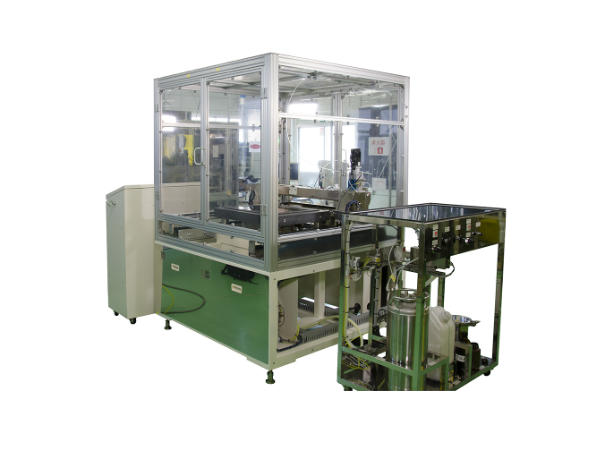
Multi-line glue dispensing machines are indispensable equipment in modern automated production lines, widely used in the assembly processes of magnetic components, productos electrónicos, precision industries, automotive parts, and smart devices. They achieve high-efficiency, high-consistency automated glue dispensing operations through multi-point synchronous glue control. To ensure stable operation and long-term high-precision output, scientific maintenance and care are crucial aspects of enterprise production management. This article systematically explains the maintenance and care strategies for multi-line glue dispensing machines from aspects such as equipment cleaning, system calibration, consumable management, environmental control, safety inspections, and long-term maintenance mechanisms. This helps users extend equipment life, reduce downtime, and improve production quality.
I. Keeping the Equipment Clean: The First Step to Maintaining Precision
Keeping the multi-line glue dispensing machine clean is fundamental to ensuring stable glue dispensing quality, especially for core components such as the glue path, dispensing head, and guide rails.
1. Clean the dispensing head and adhesive path system to prevent curing and clogging.
After prolonged operation, residual adhesive can easily cure inside the dispensing nozzles, pipes, or valves of a multi-line dispensing machine. Failure to clean regularly will lead to intermittent dispensing, uneven adhesive application, or even complete nozzle clogging. Periodically flushing the adhesive path with a suitable cleaning solvent can effectively remove uncured residual adhesive and ensure stable adhesive flow.
Good nozzle cleaning also prevents dispensing deviation and shape deformation, helping to improve product yield. For industries using fast-curing adhesives (such as UV adhesives and instant adhesives), the cleaning frequency should be increased.
2. Clean the guide rails, lead screws, and platform to maintain smooth movement.
The XYZ platform of the equipment must be kept clean; de lo contrario, dust, adhesive mist, and metal powder will accumulate on the surfaces of the guide rails and lead screws, causing movement jamming or decreased accuracy. After shutting down the equipment each day, lightly wipe the guide rails with a lint-free cloth and a low-volatile cleaning agent to protect their surface finish.
Keeping the transmission structure clean not only reduces wear but also helps maintain the positioning accuracy of the adhesive application, avoiding application deviations caused by uneven movement.
II. Regular System Calibration: A Key Step to Ensure Adhesive Application Consistency
The accuracy of a multi-line adhesive applicator relies on a stable and reliable control system; por lo tanto, regular calibration is crucial for maintaining its precision performance.
1. Calibrate Dispensing Volume to Ensure Consistency Across Each Adhesive Line
As the equipment is used over time, wear within the dispensing valve and changes in adhesive viscosity will affect the dispensing volume. Por lo tanto, regular calibration using a calibration board or standard curve is necessary to ensure that the width, thickness, and volume of each adhesive line remain consistent.
Without calibration, excessive adhesive in certain areas may lead to overflow, or insufficient adhesive may result in weak adhesion, directly impacting the quality and durability of the final product.
2. Calibrate the Positioning System to Maintain Precise Adhesive Trajectory
Precision adhesive application requires a high level of repeatability and positioning accuracy; por lo tanto, the vision system, laser positioner, or displacement sensor must be checked and calibrated regularly. If the camera algorithm deviates or the target position changes, application deviations or even deviations from the designated lines will occur.
Periodically verifying positioning accuracy allows for the timely detection of potential errors in optical systems or mechanical platforms, helping to ensure the stability of adhesive application along complex paths.
III. Effective Management of Consumables and Adhesives: Preventing Equipment Failures Due to Material Factors
Consumable management is an often overlooked but crucial aspect of multi-line adhesive application equipment maintenance.
1. Controlling Adhesive Viscosity to Ensure Flow Stability
The viscosity of adhesives from different batches or brands may vary, and temperature changes also affect adhesive flow. If the viscosity is too high, the pressure needs to be increased, easily leading to accelerated wear of the adhesive valve; if the viscosity is too low, problems such as stringing and dripping may occur.
Por lo tanto, the adhesive viscosity must be checked before use, and a constant temperature system must be used to keep the adhesive within its optimal operating range to ensure continuous and consistent application.
2. Regularly Replacing Filters and Seals to Ensure Smooth Piping
Adhesive filters prevent impurities from entering the adhesive valves and piping. If the filter is clogged, it will not only affect the amount of adhesive applied but may also cause the adhesive valve to seize. Por lo tanto, filters, seals, and tubing should be replaced regularly according to usage frequency to prevent leaks due to aging.
Preventative replacement of consumables helps avoid sudden downtime and production interruptions, keeping equipment in optimal condition.
IV. Lubrication and Mechanical Structure Maintenance: Important Measures to Extend Service Life
Wear of moving mechanical parts directly affects equipment stability; por lo tanto, proper lubrication and mechanical maintenance are essential.
1. Regularly Lubricate Guide Rails and Lead Screws to Reduce Wear
Guide rails, lead screws, gears, and linear bearings require regular replenishment of lubricating grease. Insufficient lubrication increases friction, leading to increased noise, movement deviations, and shortened mechanical life. Using specialized lubricating oil forms a good oil film, reducing wear and maintaining smooth movement.
Lubrication frequency should be determined based on the intensity of equipment use; in continuous operation environments, the lubrication cycle can be appropriately shortened.
2. Check the Operating Status of Drive Belts, Couplings, and Motors
Unstable drive belt tension can cause positioning errors in stepper or servo motors, affecting adhesive application accuracy. Loose couplings may cause vibration or even damage to the motor shaft.
Regularly inspecting and adjusting the mechanical transmission structure can prevent mechanical failures and improve the continuous stability of the equipment.
V. Environmental Control: A Key External Factor Affecting Equipment Lifespan
Multi-line glue applicators have specific environmental requirements. Inappropriate temperature, humidity, or air quality can lead to equipment malfunctions and increased maintenance costs.
1. Controlling Temperature and Humidity to Reduce Adhesive Abnormalities
Adhesive viscosity is significantly affected by ambient temperature. Excessive temperature can cause excessive adhesive flow, while excessive humidity can affect the curing properties of some adhesives. Maintaining the equipment’s operating environment at 22–28°C and 40–60% humidity is the optimal range for most industrial adhesives, ensuring consistent application.
Además, controlling ambient temperature and humidity helps protect electronic systems and sensors, extending the overall equipment lifespan.
2. Preventing Dust from Entering the Equipment to Improve Stability
Dust not only contaminates the glue applicator and optical systems but also accelerates wear on guide rails and lead screws. Por lo tanto, a certain level of cleanliness should be ensured in the workshop. If necessary, use air purification systems or partial dust-free structures to keep the equipment clean.
Maintaining a clean environment can significantly reduce maintenance frequency while improving application stability and product consistency.
VI. Safety Inspections and Long-Term Maintenance: Establishing a Systematic Maintenance Mechanism
A scientific safety inspection and maintenance plan is crucial for extending equipment lifespan and ensuring stable production.
1. Regularly Inspect Electrical Systems and Sensors
Aging of electrical wiring, drives, temperature controllers, and other components can lead to abnormal system alarms or unstable operation. Regularly inspecting the connection reliability, temperature rise, and wear of these components ensures the system operates in a stable condition.
For critical modules such as vision systems and laser sensors, vibration resistance checks are necessary to prevent calibration failures due to loosening.
2. Establish an Annual Maintenance and Spare Parts Replacement System
In addition to daily inspections, a comprehensive annual maintenance plan should be developed, including replacing important wear parts, recalibrating all systems, testing mechanical precision, and upgrading software versions. A long-term maintenance plan can significantly extend the overall lifespan of equipment, keeping the production line at high uptime.Also, maintaining inventory of critical spare parts (valves, sensores, control modules, etc.) can reduce downtime in case of failure.
The stability and lifespan of a multi-line coating machine depend not only on the manufacturing quality of the product itself, but also on the maintenance management during daily use. By properly cleaning, calibrating, lubricating, replacing consumables, controlling the environment, and conducting safety checks, the equipment can maintain high precision, high speed, and high reliability over the long term.
In today’s rapidly evolving automated manufacturing landscape, the long-term stability of equipment is a key competitive advantage for enterprises. A scientific maintenance mechanism not only reduces downtime due to malfunctions but also improves product quality and production efficiency, thereby creating higher production value.