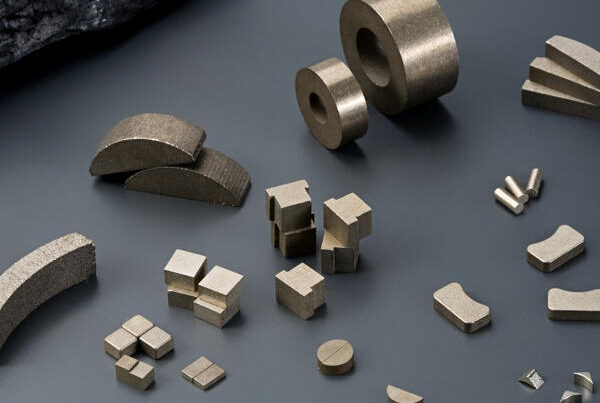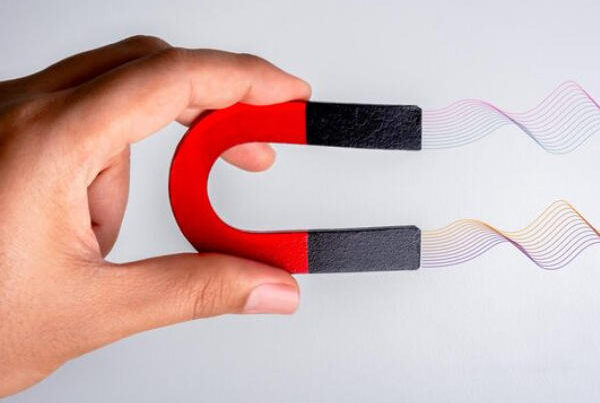

Neodymium-iron-boron (Ndfeb) aimants are high-performance permanent magnets known for their high energy product, excellent temperature stability, strong magnetic performance, and compact high-efficiency characteristics. With the rapid growth of new energy, intelligent manufacturing, automatisation industrielle, and high-end electronics, NdFeB magnets have become indispensable core materials in modern industry and consumer electronics.
Their advantages extend beyond magnetic properties, including high-temperature resistance, corrosion protection, and customizable shapes, which allow them to meet diverse application requirements across multiple industries. This article provides a detailed overview of the main applications of Aimants NDFEB and their future development trends, offering insights for procurement, research, and product design.
1. Drive Systems in Electric Vehicles
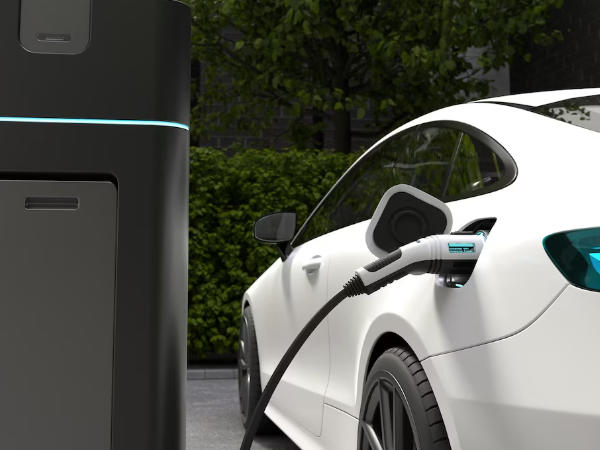
As the global electric vehicle (EV) market expands rapidly, high-performance motors are critical to enhancing driving range and energy efficiency. NdFeB magnets can generate strong magnetic fields in a small volume, making them ideal for EV drive motors, hub motors, and auxiliary motors in hybrid vehicles.
Leading EV manufacturers such as Tesla and BYD extensively use NdFeB magnets in high-speed motors and energy recovery systems, ensuring stable power output. Additionally, NdFeB magnets are used in power steering systems, electric braking systems, and auxiliary motors, contributing to overall vehicle performance reliability.
High-performance NdFeB magnets significantly reduce motor size and weight, improving overall vehicle efficiency and range. This is a primary reason why EV designers prioritize NdFeB magnets in motor and control system designs.
2. Permanent Magnet Generators in Wind Power
Aimants NDFEB are increasingly applied in wind power generation, particularly in permanent magnet synchronous generators (PMSG). Compared with traditional wound-field generators, PMSG equipped with high-performance NdFeB magnets can start generating electricity at lower wind speeds while achieving higher overall efficiency.
The high energy product and thermal stability of NdFeB magnets allow wind turbines to operate reliably in both offshore and onshore wind farms, extending equipment lifespan and reducing maintenance costs. In high-end offshore wind projects, NdFeB magnets are almost standard due to their suitability for large-capacity, low-speed generators.
De plus, NdFeB magnets help reduce the weight and size of wind turbines, optimizing the design of blades and generators, and facilitating transportation, installation, and maintenance.

3. Consumer Electronics
In smartphones, tablets, laptops, casque, and smart home devices, Aimants NDFEB play an irreplaceable role. Key applications include micro-drivers, haut-parleurs, magnetic levitation devices, and camera autofocus motors.
The compact size and high magnetic field of NdFeB magnets enhance device performance while saving space and weight. In smartphones, for example, NdFeB magnets improve speaker quality, vibration feedback, and autofocus speed. In smart home devices and wearables, their small size and high magnetic energy density enable miniaturized motors and sensors with high precision and efficiency.
4. Industrial Automation and Robotics
In industrial automation and intelligent manufacturing, NdFeB magnets are core components in high-performance servo motors, industrial robots, magnetic grippers, and automation sensors.
Their high power density and precision control allow robots to perform repetitive operations, high-speed movements, and precise positioning efficiently. For instance, in automotive assembly and electronics manufacturing, robots equipped with NdFeB-driven servo motors achieve high-speed, high-precision assembly.
Aimants NDFEB are also applied in magnetic grippers and conveyor systems, replacing traditional mechanical clamps, improving production line flexibility, efficiency, and reducing energy consumption and maintenance costs.
5. Medical Devices
NdFeB magnets are increasingly used in medical equipment, including magnetic resonance imaging (IRM) machines, powered surgical tools, dental devices, and implantable medical devices.
In MRI machines, Aimants NDFEB provide stable magnetic fields, ensuring accurate imaging. In micro-powered surgical instruments, their compact size and strong magnetic field enable lightweight, efficient devices that enhance surgical performance. In implantable devices, NdFeB magnets enable miniature drives and magnetic control functions, offering safer and more comfortable treatment solutions for patients.
6. Future Development Trends
High-temperature resistant magnets: Improve stability of EV motors and wind turbines under extreme conditions.
Environmentally friendly recycling: Reduce dependence on rare earth elements and promote sustainable development through end-of-life magnet recycling.
Miniaturization and high power density: Meet demands of drones, wearables, micro-motors, and small-scale robots.
Advanced materials and high-performance alloys: Develop low-cobalt, high-coercivity NdFeB magnets to extend service life and enhance performance stability.
Aimants NDFEB will continue to play a crucial role in new energy, intelligent manufacturing, automatisation industrielle, and high-end electronics markets. Technological innovation and material optimization will further expand their application scope, supporting industrial upgrades and sustainable development.
Conclusion
Aimants NDFEB, with their exceptional magnetic properties and wide applicability, have become indispensable core materials in modern industry, électronique grand public, and renewable energy sectors. Whether in electric vehicles, énergie éolienne, automatisation industrielle, or medical and smart electronic devices, Aimants NDFEB play a critical role. With ongoing technological innovation and sustainable development strategies, their importance in future industrial systems will continue to grow.