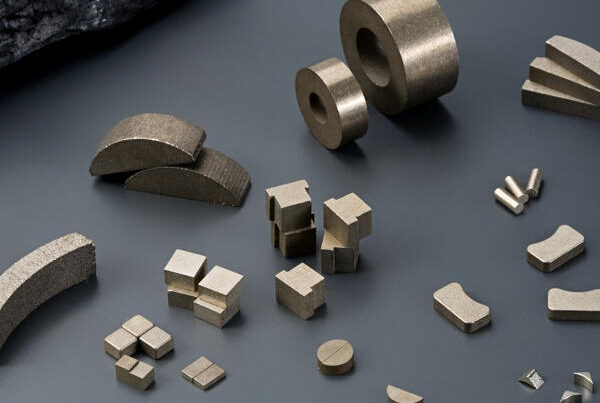

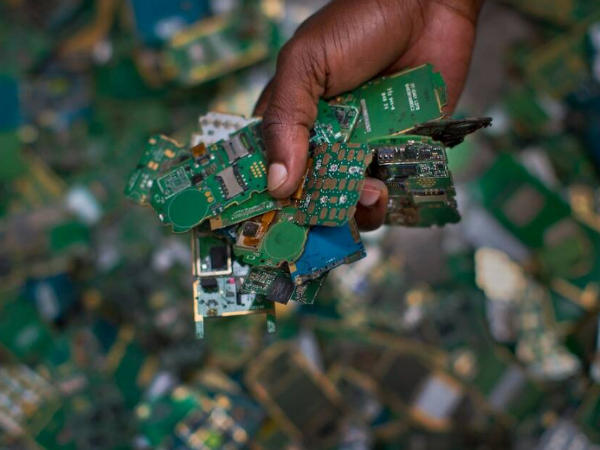
With the rapid acceleration of electronic product upgrades, the global volume of electronic waste (E-waste) is increasing at an alarming rate. Discarded smartphones, computers, household appliances, electric motors, and new energy vehicle components contain large amounts of valuable materials that are far from being fully utilized. Among them, permanent magnets are widely regarded as “hidden treasures” in electronic waste due to their excellent magnetic performance and the strategic value of their raw materials.
Efficient recycling and reuse of permanent magnets have become a key focus for both the magnetic materials industry and the environmental sustainability sector.
1. Sources and Value of Permanent Magnets in Electronic Waste
Permanent magnets are widely found in various electronic and electromechanical products, including:
- End-of-life motors and generators
- Hard disk drives (HDDs)
- Household appliances such as air conditioners, washing machines, and refrigerators
- New energy vehicle drive systems
- Industrial automation equipment
Among these, neodymium-iron-boron (NdFeB) permanent magnets are extensively used in high-efficiency motors and precision equipment due to their high magnetic energy density and stable performance. These magnets contain rare earth elements such as neodymium, praseodymium, and dysprosium, which possess high economic value and strategic importance.
Recovering permanent magnets from electronic waste not only helps alleviate resource scarcity but also significantly reduces environmental pressure caused by primary resource extraction.
2. Major Challenges in Traditional Permanent Magnet Recycling
Despite their high recycling value, permanent magnets are not easy to recycle efficiently. The main challenges include:
2.1 Complex Product Structures and Difficult Disassembly
Permanent magnets are often embedded deep inside motors or electronic assemblies and tightly bonded with metals, plastics, and adhesives, making disassembly and separation technically challenging.
2.2 Diverse Magnet Compositions
Permanent magnets used in different devices vary in composition, coatings, and performance specifications. This diversity complicates standardized recycling and reuse processes.
2.3 Risk of Performance Degradation
Improper handling during recycling, especially exposure to high temperatures or oxidation, can cause demagnetization and irreversible performance loss, reducing reuse value.
These challenges have limited the scalability and efficiency of permanent magnet recycling.
3. Key Technological Pathways for Efficient Permanent Magnet Recycling
3.1 Precision Disassembly and Pre-Treatment Technologies
Efficient recycling begins with accurate disassembly. By combining mechanical dismantling with manual assistance, permanent magnets can be separated from end-of-life equipment without damaging their structure. Subsequent removal of attached metals, plastics, and coatings prepares the magnets for further processing.
With the advancement of automated disassembly equipment, permanent magnet recycling is gradually moving toward standardized and large-scale operations.
3.2 Direct Reuse and Re-Sintering Technologies
If recovered magnets retain acceptable magnetic performance, they can be directly reused in low-end or non-critical applications, reducing processing costs.
For magnets with degraded performance, re-sintering technologies can be applied. This process involves re-powdering, re-alloying, and sintering the recovered material to restore magnetic properties. Re-sintering significantly reduces dependence on virgin rare earth resources and represents a key development direction in permanent magnet recycling.
3.3 Chemical Recycling and Rare Earth Element Recovery
Permanent magnets that cannot be directly reused can be processed through chemical recycling methods to extract rare earth elements. Common approaches include hydrometallurgical processes and selective leaching techniques, which allow rare earth elements to be separated and reused in the production of new magnetic materials.
Compared to traditional mining and refining, extracting rare earths from electronic waste typically consumes less energy and generates far less environmental pollution.
3.4 Green Processes and Low-Carbon Recycling Systems
Efficiency in recycling is not only measured by recovery rates but also by environmental impact. By optimizing process flows, reducing chemical reagent consumption, and lowering energy use, the industry is actively working toward building green and low-carbon permanent magnet recycling systems.
4. Significance of Permanent Magnet Recycling for Sustainable Development
Efficient recycling of permanent magnets contributes to sustainable development in multiple ways:
Alleviating pressure on rare earth resources by reducing reliance on primary mining
Lowering carbon emissions compared to raw material extraction and processing
Promoting circular economy models through repeated material utilization
Supporting the growth of new energy industries by securing critical material supply
As renewable energy, electric mobility, and advanced manufacturing continue to expand, permanent magnet recycling is becoming a crucial pillar for supply chain stability.
5. Future Trends and Industry Outlook
In the future, permanent magnet recycling will move toward greater intelligence, scalability, and performance consistency. The integration of automated disassembly, advanced separation technologies, and material regeneration processes will continuously improve recycling efficiency and product quality.
Driven by policy incentives and market demand, permanent magnet recycling is expected to evolve from a supplementary activity into a core component of the magnetic materials supply chain, providing long-term support for green manufacturing and a low-carbon economy.
Conclusion
Electronic waste is far from being useless; it contains a wealth of recyclable strategic resources. Through scientific and efficient recovery of permanent magnets, it is possible not only to unlock the hidden value within electronic waste but also to open new pathways for the sustainable development of the magnetic materials industry.
As recycling technologies continue to advance and industrial collaboration deepens, permanent magnet recycling is expected to play an increasingly important role in future industrial systems.