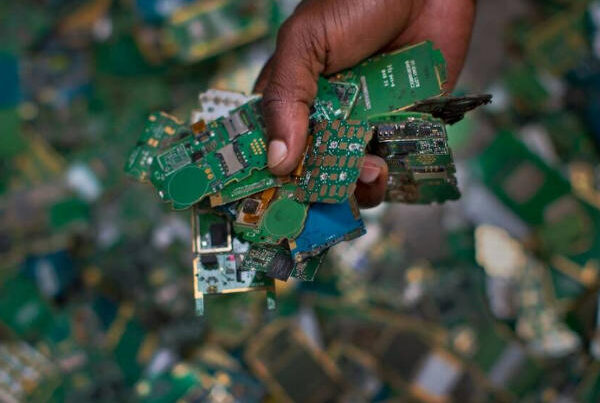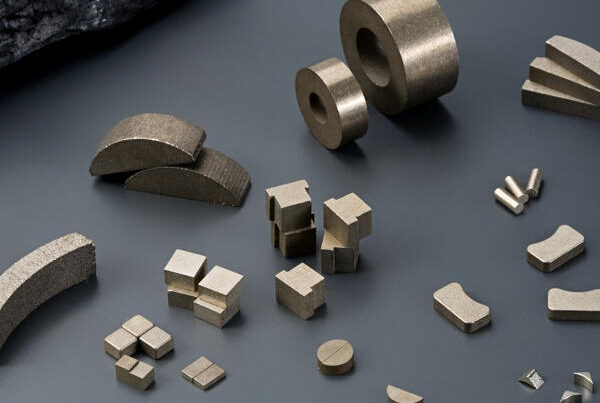

Against the backdrop of global energy transition and high-end manufacturing upgrades, the importance of permanent magnet materials is increasingly prominent. They are widely used in numerous fields such as electric vehicles, 풍력 발전, and industrial robots, and are key to achieving efficient energy conversion and high-performance equipment operation. In the world of permanent magnet materials, rare-earth permanent magnets (such as neodymium iron boron (ndfeb) dominate the high-end market due to their superior magnetic properties, while non-rare-earth permanent magnets (such as ferrites and AlNiCo) rely on cost advantages to gain a foothold in specific fields. 그러므로, this article will conduct an in-depth comparison of rare-earth and non-rare-earth permanent magnets from the perspectives of magnetic properties, 애플리케이션 시나리오, environmental adaptability, and cost supply chain.
Magnetic Properties
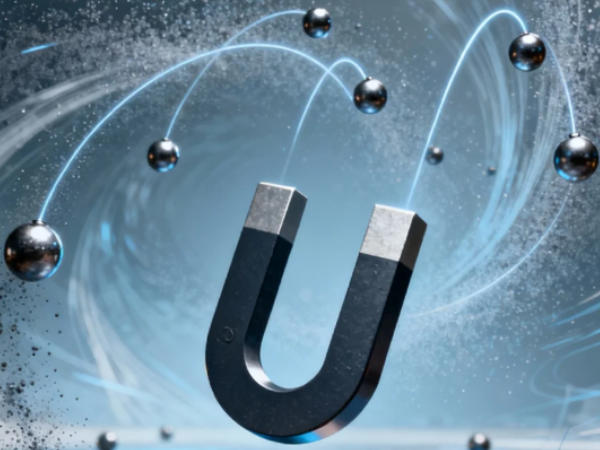
Rare-earth permanent magnets possess extremely high remanence, 보자력, and maximum energy product. Taking neodymium iron boron as an example, it is currently the most powerful permanent magnet material, capable of generating a strong magnetic field. This makes it widely used in fields with extremely high magnetic field strength requirements, such as high-performance motors, 풍력 터빈, and magnetic resonance imaging (MRI) 장비. 대조적으로, non-rare-earth permanent magnets, such as ferrite permanent magnets, have relatively weaker magnetic properties, lower remanence, and lower maximum energy product. 하지만, their coercivity can still meet the requirements of certain applications in some situations, and they are often used in applications where the magnetic field strength requirement is not high, such as loudspeakers and small motors.
Temperature Stability
Rare-earth permanent magnets have poor temperature stability. At high temperatures, their magnetic properties will significantly decrease, and irreversible demagnetization may even occur. 예를 들어, although samarium cobalt permanent magnets have better temperature stability than neodymium iron boron magnets, certain protective measures are still required at high temperatures. Non-rare-earth permanent magnets, especially ferrite permanent magnets, have good temperature stability and can maintain relatively stable magnetic properties over a wide temperature range. 그러므로, they have advantages in some high-temperature applications, such as electronic devices around automotive engines. 게다가, the ability of ferrites to resist thermal demagnetization makes them suitable for outdoor environments and equipment that operates continuously under fluctuating temperature conditions.
Mechanical Properties
Rare-earth permanent magnets are generally brittle, with high hardness but insufficient toughness. They are prone to cracking and damage during processing and use, which increases processing difficulty and cost. Non-rare-earth permanent magnets generally have better mechanical properties, possess a certain degree of toughness, and are easier to process into various shapes and sizes, making them suitable for large-scale production and application. 게다가, this machinability gives non-rare-earth magnets greater design flexibility in consumer electronics, 센서, and industrial products, where shape and structure optimization are critical.
부식 저항
Rare-earth permanent magnets are easily corroded, especially 네오디뮴 철 붕소 (ndfeb) 자석, which oxidize and rust rapidly in humid environments. 그러므로, surface treatments such as electroplating and spraying are required to improve their corrosion resistance. Non-rare-earth permanent magnets have relatively better corrosion resistance. Ferrite permanent magnets themselves possess a certain degree of corrosion resistance and do not require complex protective measures. This characteristic allows them to maintain stable performance in humid, saline, or chemically reactive environments, which is essential for outdoor and marine applications.
Cost and Resources
The production of rare-earth permanent magnets depends on rare earth elements. 하지만, the uneven distribution of rare earth resources and the high costs of mining and refining result in relatively high prices for rare earth permanent magnets. 최근 몇 년 동안, the prices of rare earth raw materials such as praseodymium and neodymium have fluctuated significantly, putting cost pressure on both manufacturers and end-user companies. Non-rare-earth permanent magnets have widely available raw materials and relatively lower costs. 예를 들어, ferrite permanent magnets use iron oxide as a main raw material, resulting in more stable prices and making them suitable for large-scale, low-cost applications. 게다가, as industries move toward sustainability, the recyclability and environmental friendliness of ferrite magnets have become increasingly attractive, especially for manufacturers aiming to reduce their dependence on critical raw materials.
요약, rare-earth permanent magnets and non-rare-earth permanent magnets exhibit significant differences in performance, application, and cost, each with its unique advantages and obvious disadvantages. In complex real-world applications, it is not possible to simply determine which permanent magnet is superior. Instead, it is necessary to comprehensively weigh specific usage requirements, harsh working environments, and sensitive cost factors to accurately select the most suitable permanent magnet material. Looking ahead, as material science continues to evolve, hybrid magnet systems and new composite materials may emerge, combining the high magnetic strength of rare-earth magnets with the thermal and corrosion stability of non-rare-earth types, paving the way for more balanced and sustainable magnet solutions in the future.