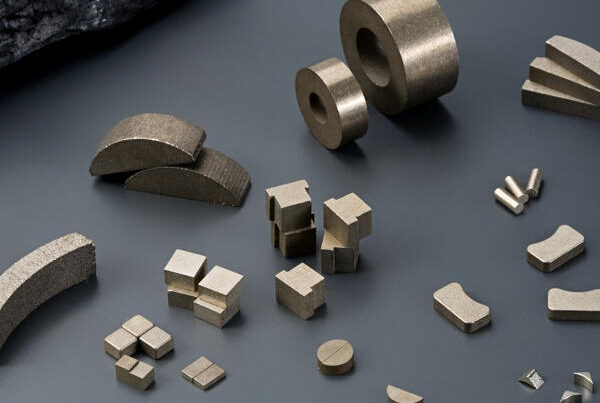

High-performance permanent magnets, especially rare earth permanent magnet materials represented by neodymium iron boron (ndfeb), are indispensable basic materials for modern industrial and technological equipment. Whether it’s new energy vehicle drive motors, 풍력 터빈, precision instruments, or intelligent robots and consumer electronics, their power systems and miniaturization capabilities rely on the powerful magnetic energy provided by permanent magnet materials. 하지만, many people only know that “rare earths are important,” but are unaware of how rare earth ores extracted from the earth’s crust are processed step by step into high-performance, stable, and reliable permanent magnets. This article will systematically review “how rare earth resources are transformed into high-performance permanent magnets,” comprehensively analyzing its key technological paths from resource extraction to final molding.
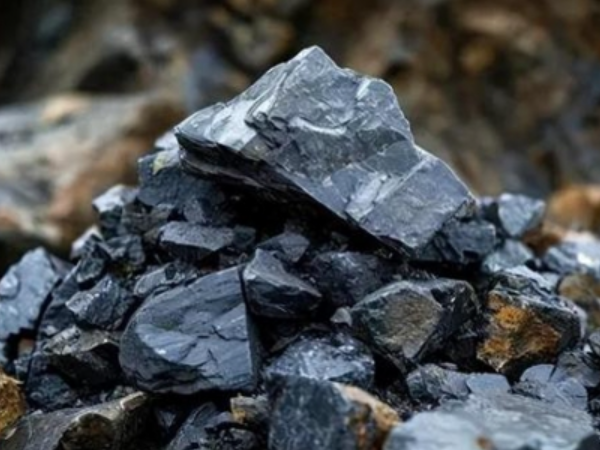
나. Mining and Beneficiation of Rare Earth Resources: The Original Source of Permanent Magnets
Rare earth ores typically contain multiple rare earth elements, but their content is extremely low, requiring complex beneficiation processes to obtain industrially usable rare earth oxides. Mining typically employs open-pit or underground mining methods, followed by processes such as flotation, gravity separation, and magnetic separation to improve the rare earth grade. Due to the significant differences in the physical properties of rare earth minerals, the optimal separation method must be selected based on the ore type to ensure effective enrichment of rare earth elements.
Even after beneficiation, the rare earth concentrate is not a pure rare earth material; it still contains impurities and substances in different oxidation states. To meet the requirements for subsequent use in permanent magnets, the impurity content must be minimized during the beneficiation stage; 그렇지 않으면, the stability and consistency of the final magnet will be affected. Quality control at this stage is crucial for the entire industry chain, directly impacting subsequent purification and smelting efficiency.
II. Hydrometallurgy and Separation Technology: Obtaining High-Purity Rare Earth Oxides
After obtaining the rare earth concentrate, single rare earth elements, 네오디뮴과 같은, praseodymium, 디스프로슘, 그리고 테르븀, need to be extracted using hydrometallurgical techniques. Common processes include acid leaching, extraction, precipitation, and roasting. These steps can separate different rare earth elements, ultimately yielding rare earth oxides or rare earth metals with a purity of up to 99.9%.
The difficulty in rare earth separation lies in the extremely similar chemical properties of the rare earth elements, especially the minimal difference in ionic radii among light rare earth elements. 그러므로, the selection of the extractant, the phase separation rate, and the process stability become crucial. High-purity rare earth oxides not only enhance the magnetic energy product of permanent magnets but also reduce magnetic domain losses caused by impurities, resulting in stronger magnetic properties and thermal stability in the final material.
III. Rare Earth Metal and Alloy Preparation: The Material Foundation for Permanent Magnets
영구 자석 require specific metal combinations. 예를 들어, NdFeB magnets are composed of neodymium, 철, 그리고 붕소, and dysprosium and terbium are often added to improve high-temperature performance. 그러므로, rare earth oxides must be reduced to metals and then alloyed with other metals to form ingots. This step typically employs metallothermic reduction or electrolysis processes, aiming to obtain a basic alloy with a good crystal structure under strict control of the component ratios.
The alloy ratio has a decisive influence on the performance of permanent magnets. Even small fluctuations in composition can lead to a decrease in magnetic power or insufficient coercivity of the material. 그러므로, the smelting process is often equipped with precision testing systems to ensure that the purity, oxygen content, and composition consistency of each batch of alloy meet industrial-grade standards.
IV. Rapid Solidification and Pulverization Technology: Forming Controllable Nanocrystals
One of the most critical steps in making 영구 자석 from alloys is the formation of fine powder through rapid solidification and hydrogen breakage. Strip casting is typically used to rapidly cool the molten metal, resulting in a uniform, fine-grained structure, which directly affects the final energy product of the permanent magnet.
Subsequently, a hydrogenation-pulverization (HD) process is employed, utilizing the reaction of hydrogen with rare earth metals to form brittle hydrides, making the alloy easily pulverized into micron-sized magnetic powder. The particle size distribution in this step is crucial; the more uniform the particles, the more orderly the subsequent magnetic field orientation, and the higher the magnet performance. If the powder particle size is uneven, it will lead to disordered magnetic domain orientation during sintering, reducing magnetic performance.
다섯. Magnetic Field Orientation Forming: Determining the Direction of Magnetic Force in Permanent Magnets
After powder preparation, the crucial “magnetic field orientation forming” stage, which determines the performance of the permanent magnet, begins. Magnetic powder is placed in a strong magnetic field, causing its crystal orientation (easy magnetization direction) to gradually align uniformly. It is then pressed into a blank using a mold. This orientation process significantly improves the remanence (브르) and maximum energy product (Bhmax) of the magnet.
The forming process requires strict control of the magnetic field strength, powder distribution, pressure, and mold temperature. Fluctuations in any of these factors can lead to uneven crystal orientation, degrading magnet performance. High-performance NdFeB permanent magnets often rely on a precise three-dimensional magnetic field orientation system, which is one of the core technologies of advanced magnet manufacturers.
VI. High-Temperature Sintering and Post-Processing: Enhancing Density and Coercivity
The formed blank needs to be sintered at high temperature in a controlled atmosphere to fuse the powder particles and increase the material density. The sintering temperature is typically between 1000°C and 1100°C. The temperature profile affects the grain size, which in turn affects the coercivity and stability of the magnet.
After sintering, annealing, machining, and surface anti-corrosion coating treatment are also required. NdFeB is prone to oxidation, therefore requiring coatings such as nickel plating, epoxy resin, and electrophoretic paint to ensure the material maintains its performance in humid or high-temperature environments. High-end permanent magnets even employ multi-layer composite coatings to enhance corrosion resistance and extend service life.
VII. Dysprosium Infiltration and High-Temperature Performance Optimization: Making Permanent Magnets More Adaptable to Extreme Environments
Equipment such as new energy vehicles and wind turbines place higher demands on the high-temperature resistance of permanent magnets, thus requiring the introduction of heavy rare earth elements such as dysprosium and terbium to improve coercivity. 하지만, heavy rare earth resources are scarce and expensive. The industry is gradually adopting “dysprosium infiltration” technology, introducing dysprosium only into the surface layer of the magnet, thereby reducing the amount used while still improving high-temperature stability.
Dysprosium infiltration is an advanced diffusion technology that, by controlling the diffusion temperature, time, and dispersant, allows dysprosium atoms to strengthen the magnet only in the grain boundary region. Compared to traditional addition methods, dysprosium infiltration not only saves resources but also significantly improves the magnet’s resistance to demagnetization under conditions of 150°C–200°C, representing a significant technological breakthrough for high-performance permanent magnets.
VIII. Testing and Performance Evaluation: Ensuring Every Magnet Meets Industry Standards
The final performance of 영구 자석 requires systematic testing, including indicators such as magnetic properties (브르, Hcj, Bhmax), density, grain structure, 및 치수 정확도. Industrial-grade permanent magnets undergo rigorous magnetic curve testing and environmental stability analysis before leaving the factory to ensure stable performance under conditions such as damp heat cycling, 소금 스프레이, and long-term high temperatures.
High-end applications such as motors and precision sensors have extremely high requirements for magnetic property consistency; 그러므로, the testing process must exclude any materials with defects or magnetic property deviations. Quality stability not only represents manufacturing level but is also a key threshold for whether permanent magnets can be applied to high-end equipment.
결론: From Rare Earth to Permanent Magnets – A Highly Technology-Intensive Industrial Chain
Converting rare earth resources into high-performance permanent magnets is not a simple material processing process but a complex chain spanning mining, metallurgy, materials science, precision manufacturing, and nanotechnology. Each step requires highly specialized technical control; instability in any link will affect the performance of the final magnet.
With the rapid development of industries such as new energy vehicles, power tools, 풍력, and intelligent manufacturing, the demand for high-performance permanent magnets continues to grow. Rare earth resources are fundamental, but the true value of permanent magnets lies in technological depth. Mastering the key processes from raw materials to high-performance magnets is the core driving force for the development of strategic emerging industries.