
Em modernos equipamentos industriais e eletrônicos, permanent magnetic materials são amplamente utilizados em motores, sensores, alto-falantes de alto desempenho, and medical devices. Entre eles, neodymium iron boron (Ndfeb) magnets and samarium cobalt (SMCO) magnets are the two most common high-performance rare earth permanent magnets. No entanto, their performance differs significantly in high-temperature environments. Selecting the appropriate magnet material is critical to ensuring equipment reliability and service life. This article provides a scientific comparison of NdFeB and SmCo magnets under high-temperature conditions and offers practical selection guidance.
1. High-Temperature Performance of Neodymium Iron Boron (Ndfeb) Magnets
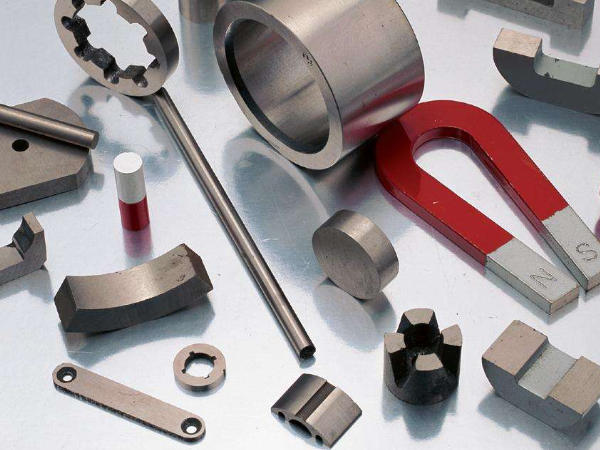
Ímãs NdFeB are composed primarily of neodymium, ferro, e boro. They are widely used due to their extremely high maximum energy product (BHₘₐₓ). No entanto, their thermal stability is relatively limited:
Low Curie Temperature:
The Curie temperature of NdFeB magnets typically ranges from 310 °C to 340 ° c. Once this temperature is exceeded, the magnet rapidly loses its magnetic properties.
Significant Reduction in Coercivity:
As temperature increases, the coercivity of NdFeB magnets decreases noticeably. Por exemplo, standard N35-grade NdFeB magnets may experience a 20%–30% loss in coercivity at 100 ° c, with even greater degradation at 150 °C or higher.
Susceptibility to Oxidation:
High temperatures accelerate surface oxidation of Ímãs NdFeB, especially those without protective coatings. Oxidation can lead to reduced magnetic performance, structural damage, or even cracking.
To improve high-temperature performance, manufacturers often use high-temperature grades such as N38EH or N40UH and apply surface coatings like nickel plating, epoxy resin, or passivation layers. While these measures enhance heat resistance and oxidation protection, the long-term thermal stability of NdFeB magnets still remains inferior to that of samarium cobalt magnets.
2. High-Temperature Performance of Samarium Cobalt (SMCO) Magnets
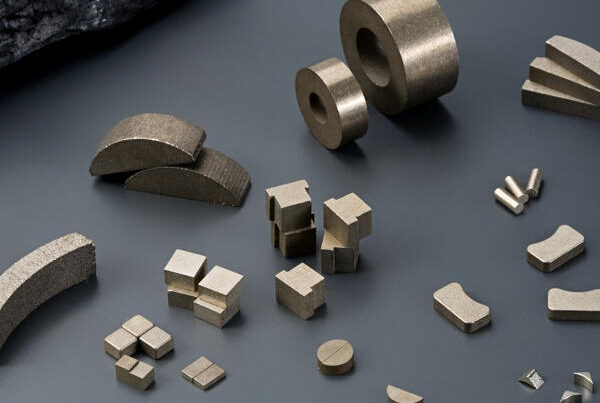
Ímãs de samário-cobalto are made from samarium, cobalto, and small amounts of iron or copper. They are well known for their excellent thermal stability:
High Curie Temperature:
SmCo magnets have Curie temperatures of approximately 700 ° c, nearly twice that of NdFeB magnets. This allows them to retain magnetic properties in extreme thermal environments.
Excellent Temperature Coefficient of Coercivity:
Even at temperatures around 300 ° c, SmCo magnets maintain high coercivity with minimal magnetic degradation, far outperforming NdFeB magnets under the same conditions.
Superior Oxidation and Corrosion Resistance:
Ímãs SmCo exhibit strong resistance to oxidation and corrosion. Their magnetic properties remain stable even in high-temperature or mildly humid environments, often without the need for surface coatings.
Because of these characteristics, SmCo magnets are widely used in high-temperature motors, aerospace systems, and precision instruments, especially in applications requiring continuous operation at 200 °C–350 °C or higher.
3. High-Temperature Application Scenarios
When selecting magnet materials, the operating environment must be carefully evaluated:
| Temperatura operacional | Material Recomendado | Reason |
| ≤100 °C | Ndfeb | High energy density, lower cost, suitable for most electronic and industrial devices |
| 100–200 °C | High-temperature NdFeB | Controlled coercivity loss, requires protective coatings |
| 200–350 °C | SMCO | Stable coercivity, minimal magnetic degradation, high long-term reliability |
| >350 ° c | SMCO | NdFeB becomes unusable; SmCo retains magnetism, ideal for aerospace and high-temperature motors |
This comparison clearly shows that SmCo magnets are more reliable in medium to high-temperature and extreme-temperature environments, while NdFeB magnets are better suited for lower-temperature, cost-sensitive applications.
4. Comparison of Other Performance Characteristics
Beyond thermal stability, NdFeB and SmCo magnets differ in several other aspects:
Produto máximo de energia (BHₘₐₓ):
Ímãs NdFeB offer extremely high energy products ranging from 35–52 MGOe, whereas SmCo magnets typically range from 20–32 MGOe. NdFeB provides stronger magnetic force in low-temperature environments.
Mechanical Properties:
SmCo magnets are relatively brittle and prone to cracking, requiring careful handling during machining and installation. NdFeB magnets are also brittle but are generally easier and more cost-effective to manufacture in various shapes.
Cost Considerations:
SmCo magnets are usually more expensive than NdFeB magnets due to high cobalt content and complex manufacturing processes. Designers must balance performance requirements with budget constraints.
5. Strategies to Improve the High-Temperature Performance of NdFeB Magnets
For applications that prefer to use NdFeB magnets under elevated temperatures, the following approaches can help improve performance:
High-Temperature Grades:
Selecting SH, EH, or UH grades provides higher coercivity and better thermal resistance.
Surface Protection:
Nickel plating, epoxy coatings, or anti-oxidation treatments can significantly reduce oxidation at high temperatures.
Optimized Heat Treatment:
Proper annealing processes refine grain structure and magnetic domains, improving thermal stability.
Hybrid Magnet Design:
Using SmCo magnets or thermal insulation in high-temperature zones helps reduce thermal stress and extend overall system reliability.
Conclusão
Samarium cobalt and neodymium iron boron magnets each offer distinct advantages. In high-temperature environments, SmCo magnets are clearly superior, maintaining stable magnetic performance at 200 °C–350 °C or even higher, while also providing excellent corrosion resistance and long-term reliability. Ímãs NdFeB, although offering higher energy density and lower cost, experience faster magnetic degradation at elevated temperatures and are best suited for low-temperature or carefully optimized high-temperature applications.
Ultimately, the choice between SmCo and NdFeB magnets should be based on a comprehensive evaluation of operating temperature, cost constraints, Requisitos de desempenho magnético, and mechanical considerations to ensure reliable and long-lasting system performance.
Para saber mais informações,você pode visitar nosso site:https://jlmag-innovation.com/
TELEFONE:86 181 7907 4071
E-MAIL: sales01.jlmaginnovation@jlmag.com.cn