
As an important branch of the magnetic materials field, ímãs de borracha, com sua flexibilidade única, plasticidade, e propriedades magnéticas, have achieved large-scale applications in several core areas. Their rapid technological iteration and scenario expansion capabilities continue to lead industry transformation. This article will deeply analyze how rubber magnets are reshaping the modern industrial ecosystem from three dimensions: material characteristics, cenários de aplicação, and technological breakthroughs.
EU. Material Characteristics: The Scientific Code of Flexible Magnetism
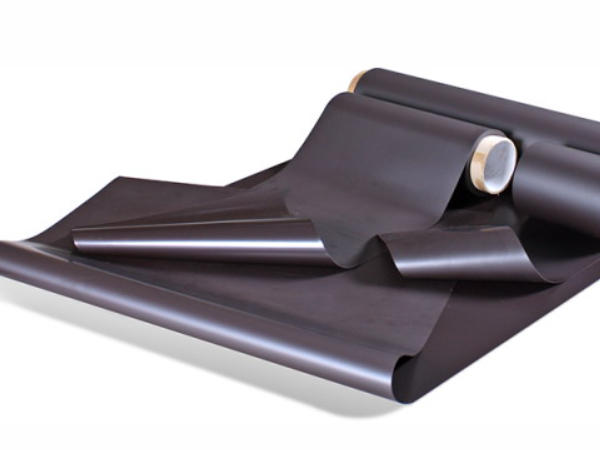
The core component of ímãs de borracha is a composite material of ferrite magnetic powder and polymer, formed through processes such as calendering, vulcanization, and magnetization. Their performance parameters exhibit significant differences:
Homotropic rubber magnets: Single-sided multi-pole magnetization, suitable for sealing strips, advertising signs, etc..
Anisotropic rubber magnets: Magnetização direcional dupla face, usado principalmente em micromotores e sistemas de acionamento elétrico para veículos de novas energias.
Ajustando o tamanho das partículas e a quantidade de enchimento do pó magnético, a permeabilidade magnética e a resistência mecânica do material podem ser otimizadas. Por exemplo, algumas empresas desenvolveram folhas magnéticas ultrafinas que foram produzidas em massa e aplicadas em ventiladores de refrigeração de computadores, motores de passo para impressora, e outros equipamentos.
II. Cenários de aplicação: Da estética do estilo de vida à revolução industrial
2.1 Eletrônicos de consumo: Inovadores de componentes funcionais invisíveis
No campo dos smartphones, ímãs de borracha alcançaram avanços em diversas áreas:
Módulos de carregamento sem fio: Materiais magnéticos macios nanocristalinos reduzem a perda de transmissão de sinal e otimizam a eficiência de carregamento através de características de alta frequência.
Sistemas de Vedação Estrutural: Folhas magnéticas finas podem suportar vários ciclos de comutação e são usadas em aplicações como armários de desinfecção e armários de cozinha.
Dispositivos vestíveis: Matrizes magnéticas flexíveis permitem adsorção precisa de dispositivos e acessórios, como o design magnético de liberação rápida de pulseiras e corpos de smartwatch.
2.2 Indústria Automotiva: Um fator-chave para a transformação da eletrificação
A demanda por ímãs de borracha em veículos de novas energias está mostrando uma tendência crescente:
Sistemas de acionamento elétrico: Anisotropic rubber magnets são usados para posicionamento do rotor do motor; a estabilidade das propriedades magnéticas afeta diretamente o desempenho do veículo. Alguns modelos usam motores síncronos de ímã permanente, melhorando o desempenho da potência do veículo através da otimização sinérgica de neodímio, ferro, boro e ímãs de borracha.
Interação Interior: Suportes magnéticos para telefone, porta-copos, e outros acessórios utilizam as propriedades de adsorção flexíveis dos ímãs de borracha para melhorar a segurança ao dirigir.
Vedação e redução de ruído: As tiras de vedação das portas utilizam ímãs de borracha revestidos de PVC para otimizar o controle de ruído no veículo e melhorar a experiência de direção.
2.3 Medicina e Saúde: Um assistente invisível para tratamento de precisão
A aplicação de ímãs de borracha na área médica rompe o entendimento tradicional:
Produtos de terapia magnética: Correias magnéticas, joelheiras, etc., promover a circulação sanguínea através de um campo magnético constante, fornecendo suporte auxiliar para a saúde das articulações.
Instrumentos Cirúrgicos Minimamente Invasivos: Os sistemas de navegação magnética utilizam os recursos flexíveis de posicionamento dos ímãs de borracha para obter controle preciso de cateteres em vasos sanguíneos, melhorando a segurança cirúrgica.
Equipamento de monitoramento inteligente: Implantable magnetic sensors detect changes in the magnetic field and monitor physiological indicators such as heart rate and blood sugar in real time, providing data support for health management.
2.4 Industrial Automation: An Efficiency Engine for Flexible Production
In intelligent manufacturing scenarios, rubber magnets achieve multi-faceted functional upgrades:
Intelligent Warehousing: Magnetic marking systems optimize the goods sorting process through different polarity combinations of coding.
Robot Collaboration: Flexible magnetic grippers adapt to the gripping of irregularly shaped workpieces; after application on an automotive production line, changeover time was significantly shortened.
Process Control: Magnetic sensors detect equipment operating status, facilitating predictive maintenance and reducing equipment downtime.
III. Technological Breakthroughs: O cenário futuro da inovação de materiais
A iteração tecnológica da indústria exibe múltiplas tendências:
Inovação em materiais compósitos: A combinação de ímãs de borracha à base de ferrita e elementos de terras raras melhora o desempenho magnético enquanto otimiza custos.
Atualizações do processo de fabricação: A produção em massa de tecnologia de calandragem contínua de folhas magnéticas ultrafinas atende às demandas de campos emergentes, como dispositivos dobráveis e microdrones.
Nos campos militar e aeroespacial, materiais de absorção magnética à base de borracha de alto desempenho demonstram valor estratégico:
Tecnologia furtiva: Aplicado a revestimentos de jatos de combate, otimizando as características de reflexão do radar.
Proteção Eletromagnética: Camadas de blindagem magnética são usadas em sistemas de comunicação de navios para aprimorar as capacidades anti-interferência.
Exploração Espacial: Radiation-resistant rubber magnets are used in satellite attitude control systems to extend on-orbit lifespan.
Conclusão: The Infinite Possibilities of Flexible Magnetism
From everyday consumer goods to high-end equipment, ímãs de borracha are reshaping the industry landscape as “hidden champions.” With continuous breakthroughs in material composites, process precision, and application scenarios, their market penetration rate will steadily increase. For businesses, it is necessary to seize development opportunities in a timely manner and actively respond to industry challenges.