
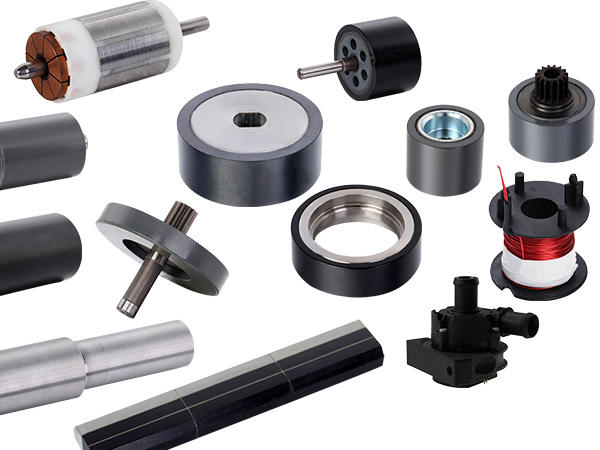
Rotary magnetic assemblies are crucial functional components in many rotating devices, including brushless motors, magnetic couplers, precision encoders, stirring systems, and high-precision transmission mechanisms. They typically consist of permanent magnets, metal housings, bearings, adhesive layers, and protective coatings. Under multiple stresses such as high-speed rotation, temperature changes, mechanical shock, and magnetic field loads, the performance and lifespan of magnetic assemblies directly impact the stability and efficiency of the entire machine. To ensure the reliability of these systems during long-term operation, systematic optimization is needed across five dimensions: material selection, structural design, manufacturing processes, protective measures, and the operating environment. This article will analyze in depth how to scientifically improve the lifespan of rotor magnetic assemblies, providing practical technical references for engineering design and production.
我. The Core of Improving Lifespan: Starting with Material Selection
Materials are the foundation for determining the lifespan of magnetic assemblies. The quality and stability of 永磁体, metal frames, adhesives, and bearings directly affect overall reliability. 所以, the first step is to rigorously screen materials from the source and scientifically evaluate their performance.
1. Select High-Stability Permanent Magnet Materials
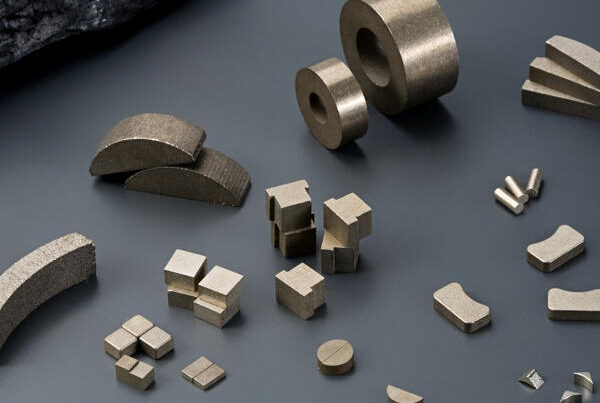
永久磁铁 are the core component of rotor assemblies. While NdFeB magnets offer high magnetic properties, they are sensitive to temperature and corrosion. 所以, for high-temperature applications, grades with high coercivity (such as 38SH and 42UH) should be prioritized, and a reasonable margin for magnetic performance decay should be allowed based on the operating temperature. For particularly harsh environments, SmCo magnets can be considered due to their higher temperature resistance and lower magnetic decay rate.
Good raw materials not only improve magnetic properties but also significantly extend service life. 例如, high-quality NdFeB magnets utilize powders with low oxygen content and a rigorous grain boundary diffusion process to reduce the formation of brittle cracks, thereby improving fatigue resistance and demagnetization resistance.
2. Select High-Strength, Fatigue-Resistant Metal Shell Materials
The shell of magnetic components is typically made of stainless steel or high-strength iron-nickel alloys. To improve lifespan, materials that combine corrosion resistance and mechanical strength should be selected, 例如 304/316 stainless steel or low-carbon steel with high magnetic permeability. The high strength of the alloy not only ensures that the magnet will not crack due to centrifugal force during high-speed rotation, but also improves the reliability of the component under torque impact.
此外, the magnetic properties of the metal casing (such as permeability and magnetic loss) also affect the component’s efficiency. Appropriate selection of magnetic materials or composite materials can enhance the stability of the magnetic flux path, thereby reducing magnetic eddy current heat loss and the risk of reduced lifespan at high temperatures.
二. Structural Design Optimization: Enhancing Mechanical Safety and Magnetic Field Stability
Structural design directly affects the component’s seismic resistance, thermal stability, and magnetic balance, and is a crucial factor in improving its service life.
1. Optimizing the Magnet Fixing Structure to Reduce Stress Concentration
Under high-speed rotation conditions, the magnet will be subjected to strong centrifugal force, therefore a reliable fixing structure must be adopted, such as mechanical slots, annular sleeves, and composite adhesive fixing methods. Optimizing the magnet position and gap can avoid excessive local stress, thereby reducing the risk of magnet cracking or detachment.
此外, a reasonable fixing structure can also improve the rotor’s dynamic balance, reduce vibration, and thus extend the lifespan of the bearings and the magnets themselves. In engineering, finite element analysis (有限元分析) is usually used to simulate load distribution in advance to ensure design safety.
2. Adopting a Composite Protection Design to Reduce Environmental Impact
Rotor-type magnetic components experience temperature rise during operation, and different materials may have different coefficients of thermal expansion. If the design is inadequate, thermal expansion and contraction can lead to stress accumulation, causing adhesive layer aging or magnet cracking. 所以, transition and buffer layers are crucial in the design. 例如, adding a flexible adhesive layer between the metal sleeve and the magnet can significantly disperse thermal stress.
Simultaneously, for humid or dusty environments, a double-layer metal shell or an integrated encapsulation design can be used to prevent the magnet from being directly exposed, thereby reducing the risk of corrosion.
三、. Manufacturing Process Control: A Key Step in Creating High-Reliability Components
Temperature, 压力, adhesive layer thickness, and magnet registration accuracy during the manufacturing process all affect the final lifespan. 所以, process control must be precise and rigorous.
1. The reliability of the magnet bonding process is one of the key factors determining lifespan.
The bonding process needs to ensure that the adhesive layer is uniform, has moderate viscosity, and is fully cured. Adhesive layers that are too thick or too thin will reduce adhesion, leading to a shortened fatigue life. Industrially, automated dispensing machines and CNC processes are typically used for quality stabilization management, and heat curing is employed to improve the structural strength of the adhesive.
此外, industrial-grade epoxy resins or silicone adhesives that are resistant to high temperatures, 振动, and aging should be selected. Low-quality adhesives are prone to aging and detachment at high speeds, leading to the instantaneous detachment of magnets and causing serious mechanical failure.
2. Precision Assembly and Dynamic Balancing Calibration Ensure Long-Term Stability
The dynamic balance of the rotor is one of the key parameters ensuring the lifespan of the magnetic components. An unbalanced rotor will produce excessive vibration, leading to accelerated bearing wear, magnet structural fatigue, and even adhesive layer detachment. 所以, a coarse balancing and a fine balancing must be performed during the manufacturing process to ensure stable rotor operation even at high speeds.
组装时, it is also necessary to maintain consistent magnet alignment angles. Excessive magnetic pole deviation will cause uneven magnetic fields, increasing rotational losses and heat generation, further shortening the component’s lifespan.
四号. Surface Protection and Corrosion Resistance Treatment: Key Technologies for Extending Lifespan
永久磁铁, especially NdFeB, are highly susceptible to oxidation. 所以, their corrosion resistance must be ensured through external coatings or sealing structures.
1. Choosing the Right Magnet Coating to Enhance Protection
Common coatings include Ni-Cu-Ni, 环氧树脂, E-coating, and Parylene vacuum coating. In high-humidity or chemically corrosive environments, Parylene or epoxy coatings can be used, as their excellent sealing capabilities prevent air and moisture penetration.
High-quality coatings not only prevent corrosion but also reduce the propagation of microcracks on the magnet surface, thereby improving long-term stability. In automotive, 发动机, and outdoor equipment, the quality of the magnet coating is often a key factor determining lifespan.
2. Metal Sleeves or Complete Encapsulation Further Enhance Durability
In high-speed applications, completely encapsulating the magnet within a metal sleeve is a highly safe practice. The metal casing not only blocks external environmental corrosion but also withstands the centrifugal stress generated by the magnet’s rotation, ensuring its safety and reliability even under extreme conditions.
Metal encapsulation combined with vacuum potting design significantly enhances shock resistance, allowing the product to maintain its structural integrity under impact, 高速, or high pressure.
V. Management of Actual Usage Environment: Extending Component Lifespan
Even with excellent product quality, an inappropriate usage environment can shorten the lifespan of magnetic components. 所以, proper use and maintenance are equally important.
1. Controlling Operating Temperature to Prevent Magnetic Performance Degradation
Each magnet has a maximum operating temperature; exceeding this temperature will cause irreversible demagnetization. Rotors tend to overheat at high speeds, so ensure the equipment has a good cooling system, such as using air cooling, oil cooling, or high thermal conductivity materials for auxiliary cooling.
If the application environment has extremely high temperatures, high-temperature grade magnets or SmCo magnets can be selected to avoid high-temperature demagnetization that can lead to performance degradation or even failure.
2. Avoiding Excessive Vibration and Mechanical Shock
Vibration accelerates component fatigue, especially affecting the adhesive layer and the magnet body. When installing equipment, ensure the foundation is stable and the supporting structure is reliable. 此外, avoid frequent impacts or sudden starts and stops; these unstable loads will accelerate the propagation of magnet cracks, thereby shortening lifespan.
In harsh operating conditions, installation methods with buffer mechanisms can be used to reduce vibration transmission.
综上所述,improving the lifespan of rotor magnetic components is not a single-point improvement, but a comprehensive system engineering project involving optimization of materials, design, 过程, protection, and operating environment. Through scientific material selection, rigorous manufacturing processes, reasonable magnet protection structures, and proper environmental management, magnetic components can maintain stable operation under high loads, high speeds, and complex operating conditions.
With the development of motor technology, automated equipment, and efficient transmission systems, rotor magnetic components will play an important role in more fields. 将来, through high-performance permanent magnet materials, advanced grain boundary diffusion technology, intelligent manufacturing assembly, and stronger protective coating processes, the lifespan of magnetic components will be further improved, providing more reliable and efficient power solutions for modern industry.