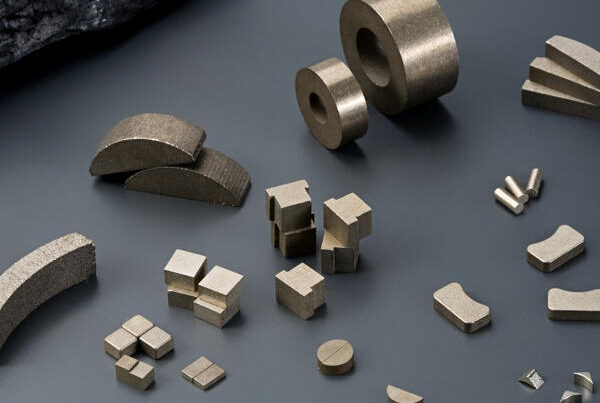

In modern industrial and electronic equipment, permanent magnetic materials 广泛用于电动机, 传感器, high-performance loudspeakers, and medical devices. 他们之中, 钕铁硼 (ndfeb) magnets and samarium cobalt (SMCO) magnets are the two most common high-performance rare earth permanent magnets. 然而, their performance differs significantly in high-temperature environments. Selecting the appropriate magnet material is critical to ensuring equipment reliability and service life. This article provides a scientific comparison of NdFeB and SmCo magnets under high-temperature conditions and offers practical selection guidance.
1. High-Temperature Performance of Neodymium Iron Boron (ndfeb) 磁铁
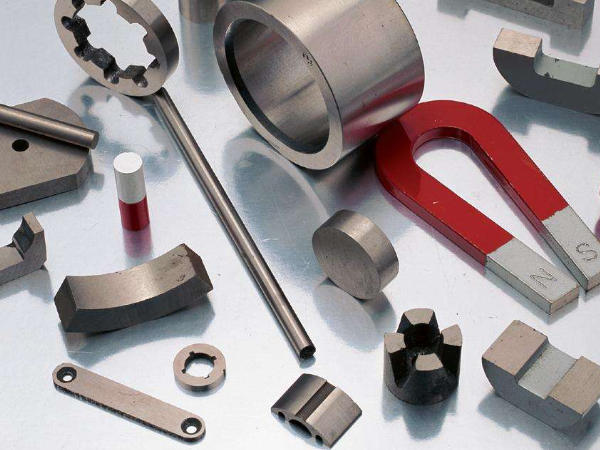
NDFEB磁铁 are composed primarily of neodymium, 铁, 和硼. They are widely used due to their extremely high maximum energy product (BHₘₐₓ). 然而, their thermal stability is relatively limited:
Low Curie Temperature:
NdFeB 磁体的居里温度通常范围为 310 °C 至 340 ℃. 一旦超过这个温度, 磁铁迅速失去磁性.
矫顽力显着降低:
随着温度升高, 钕铁硼磁体的矫顽力明显下降. 例如, 标准 N35 级 NdFeB 磁体的矫顽力可能会损失 20%–30% 100 ℃, 甚至更大的退化 150 °C或更高.
氧化敏感性:
高温加速表面氧化 NDFEB磁铁, 尤其是那些没有保护涂层的. 氧化会导致磁性能降低, 结构性损坏, 甚至开裂.
提高高温性能, 制造商经常使用N38EH或N40UH等高温牌号,并采用镀镍等表面涂层, 环氧树脂, 或钝化层. While these measures enhance heat resistance and oxidation protection, the long-term thermal stability of NdFeB magnets still remains inferior to that of samarium cobalt magnets.
2. High-Temperature Performance of Samarium Cobalt (SMCO) 磁铁
samarium钴磁铁 are made from samarium, 钴, and small amounts of iron or copper. They are well known for their excellent thermal stability:
High Curie Temperature:
SmCo magnets have Curie temperatures of approximately 700 ℃, nearly twice that of NdFeB magnets. This allows them to retain magnetic properties in extreme thermal environments.
Excellent Temperature Coefficient of Coercivity:
Even at temperatures around 300 ℃, SmCo magnets maintain high coercivity with minimal magnetic degradation, far outperforming NdFeB magnets under the same conditions.
Superior Oxidation and Corrosion Resistance:
钐钴磁铁 exhibit strong resistance to oxidation and corrosion. 即使在高温或轻度潮湿的环境中,它们的磁性能也保持稳定, 通常不需要表面涂层.
由于这些特点, 钐钴磁铁广泛应用于高温电机, 航空航天系统, 和精密仪器, 特别是在需要连续运行的应用中 200 °C–350 °C 或更高.
3. 高温应用场景
选择磁铁材料时, 必须仔细评估操作环境:
| 工作温度 | 推荐材质 | 原因 |
| ≤100℃ | ndfeb | 高能量密度, 成本更低, 适用于大多数电子和工业设备 |
| 100–200°C | 高温钕铁硼 | 控制矫顽力损失, 需要保护涂层 |
| 200–350°C | SMCO | 矫顽力稳定, 最小的磁退化, 高长期可靠性 |
| >350 ℃ | SMCO | 钕铁硼变得无法使用; 钐钴保持磁性, 航空航天和高温电机的理想选择 |
这一比较清楚地表明,钐钴磁铁在中高温和极端温度环境中更可靠, 而 NdFeB 磁体更适合较低温度, 成本敏感型应用.
4. 其他性能特征比较
超越热稳定性, 钕铁硼和钐钴磁铁 在其他几个方面有所不同:
最大能量产品 (BHₘₐₓ):
NDFEB磁铁 提供 35–52 MGOe 范围内的极高能量产品, 而钐钴磁铁通常范围为 20–32 MGOe. 钕铁硼在低温环境下提供更强的磁力.
机械性能:
钐钴磁铁相对较脆,容易破裂, 在加工和安装过程中需要小心处理. 钕铁硼磁体也很脆,但通常更容易且更具成本效益地制造各种形状.
成本考虑:
由于钴含量高且制造工艺复杂,钐钴磁铁通常比钕铁硼磁铁更昂贵. 设计人员必须平衡性能要求与预算限制.
5. 提高 NdFeB 磁体高温性能的策略
适用于喜欢在高温下使用 NdFeB 磁铁的应用, 以下方法可以帮助提高性能:
高温牌号:
选择SH, 埃希, 或 UH 牌号提供更高的矫顽力和更好的耐热性.
表面保护:
镀镍, 环氧涂料, 或者抗氧化处理可以显着减少高温下的氧化.
优化热处理:
适当的退火工艺可细化晶粒结构和磁畴, 提高热稳定性.
混合磁铁设计:
Using SmCo magnets or thermal insulation in high-temperature zones helps reduce thermal stress and extend overall system reliability.
结论
Samarium cobalt and neodymium iron boron magnets each offer distinct advantages. In high-temperature environments, SmCo magnets are clearly superior, maintaining stable magnetic performance at 200 °C–350 °C or even higher, while also providing excellent corrosion resistance and long-term reliability. NDFEB磁铁, although offering higher energy density and lower cost, experience faster magnetic degradation at elevated temperatures and are best suited for low-temperature or carefully optimized high-temperature applications.
Ultimately, the choice between SmCo and NdFeB magnets should be based on a comprehensive evaluation of operating temperature, 成本限制, 磁性能要求, 和机械方面的考虑,以确保可靠且持久的系统性能.
了解更多信息,您可以访问我们的网站:https://jlmag-innovation.com/
电话:86 181 7907 4071
电子邮件: sales01.jlmaginnovation@jlmag.com.cn