


Alnico (Aluminio-Níquel-Cobalto) imanes are permanent magnetic materials composed mainly of aluminum, níquel, cobalto, y hierro. As one of the earliest industrialized permanent magnet materials, AlNiCo has a long application history across industrial, electrical, and medical fields.
Compared with neodymium-iron-boron (Ndfeb) imanes, Imanes de alnico have a lower magnetic energy product. Sin embargo, they offer excellent high-temperature resistance, strong magnetic stability, and good corrosion resistance. These properties make them irreplaceable in many medical devices where stability is more important than maximum magnetic strength.
AlNiCo magnets are generally classified into cast and sintered types. Different manufacturing processes affect magnetic performance, mechanical strength, and machinability, making them suitable for different types of medical equipment.
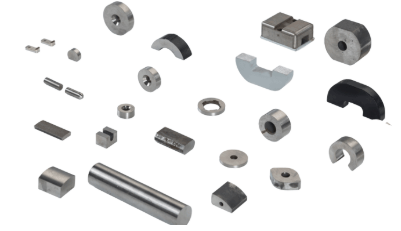
1. Why Are AlNiCo Magnets Used in Medical Devices?
1.1 High Requirements for Magnetic Stability in Medical Equipment
Medical devices involve diagnosis, monitoring, and treatment functions, where operational stability directly affects diagnostic accuracy and patient safety.
In sensors, detection modules, and precision motors, magnetic field fluctuations may cause measurement errors or control deviations. Imanes de alnico provide excellent remanence stability, effectively reducing magnetic drift over time.
Compared with high-strength but less stable magnetic materials, AlNiCo magnets are better suited for medical equipment that requires long-term continuous operation.
1.2 Compatibility with High-Temperature Sterilization
Many medical devices require high-temperature sterilization or repeated disinfection processes, such as autoclaving or dry heat sterilization.
Conventional magnets may suffer from demagnetization under high temperatures. En contraste, AlNiCo magnets can withstand much higher operating temperatures, making them suitable for components exposed to frequent sterilization cycles.
This is particularly important in surgical instruments, laboratory devices, and certain diagnostic systems, where thermal resistance significantly extends equipment lifespan.
1.3 Strong Corrosion Resistance for Long-Term Use
Medical environments demand high standards of cleanliness and corrosion resistance.
Imanes de alnico possess good oxidation resistance. Compared with materials that are more prone to corrosion, they remain stable in humid environments, disinfectant exposure, and other harsh conditions.
Como resultado, medical devices using AlNiCo magnets are less likely to experience performance degradation or structural failure over time.
2. Main Applications of AlNiCo Magnets in Medical Devices
2.1 Medical Sensor Systems
In modern medical equipment, magnetic sensors are widely used for position detection, speed measurement, and motion control.
AlNiCo magnets provide a stable magnetic field for Hall-effect sensors and magnetic induction systems, improving measurement accuracy.
Typical applications include:
- Flow monitoring in infusion pumps
- Position feedback in medical robots
- Motion detection in vital sign monitoring systems
- Magnetic positioning modules in precision diagnostic equipment
Since these systems require long-term stability, consistent magnetic performance is critical.
2.2 Medical Motors and Drive Systems
Many medical devices contain miniature motors, como:
- Ventilators
- Infusion pumps
- Centrifuges
- Surgical instruments
- Dental equipment
Imanes de alnico can be used in high-stability motor rotors to ensure consistent output performance.
In continuous operation scenarios, their high-temperature resistance reduces the risk of magnetic degradation, thereby lowering equipment failure rates.
Compared with some high-strength magnetic materials, AlNiCo magnets perform more reliably under long-term thermal stress, making them suitable for high-reliability medical drive systems.
2.3 MRI and Magnetic Field Support Systems
Although MRI (Magnetic Resonance Imaging) systems primarily use superconducting magnets, AlNiCo magnets may still be used in auxiliary components, magnetic field calibration modules, and sensor systems.
Their stable magnetic properties help achieve more precise field control.
Además, AlNiCo magnets are also used in laboratory magnetic analysis equipment and medical research instruments for auxiliary magnetic circuit design.
2.4 Hearing Aids and Small Medical Devices
Hearing aids, portable diagnostic devices, and micro-therapeutic instruments require compact size and high stability.
A pesar de Imanes de alnico are not as strong as NdFeB magnets, they offer advantages in stability and temperature resistance in specific structural designs.
Examples include:
- Miniature speakers in hearing aids
- Medical audio systems
- Micro vibration devices
- Precision sound transmission systems
These devices require long-term stable operation, making magnetic stability and low degradation essential.
3. Advantages of AlNiCo Magnets Compared with Other Magnetic Materials
3.1 Superior High-Temperature Resistance Compared to NdFeB
NdFeB magnets offer very strong magnetic force but are prone to demagnetization at high temperatures.
Medical devices often operate continuously and may undergo sterilization processes, making thermal stability crucial.
AlNiCo magnets maintain stable performance even under high temperatures, which is a key reason they remain widely used in the medical industry.
3.2 Excellent Long-Term Magnetic Stability
Medical equipment is often expected to operate reliably for many years.
If magnetic performance degrades over time, it may lead to reduced precision or system failure.
Imanes de alnico provide strong long-term stability, making them preferred in high-reliability medical systems.
In precision sensing and diagnostic applications, stability is often more important than raw magnetic strength.
3.3 Better Suitability for Precision Analog Systems
AlNiCo magnets exhibit relatively linear magnetic characteristics, making them suitable for analog control systems.
In high-precision medical diagnostic equipment, engineers prioritize controllable and stable magnetic output over maximum magnetic strength.
Por lo tanto, AlNiCo magnets continue to play an important role in precision medical electronics.
4. New Requirements for AlNiCo Magnets in the Medical Industry
4.1 Increasing Demand for Miniaturization
With the development of portable medical devices, products are becoming smaller and lighter.
This requires magnets not only to maintain stability but also to achieve higher efficiency in smaller sizes.
Como resultado, the medical industry is pushing AlNiCo magnets toward miniaturization and high-precision manufacturing.
4.2 Stricter Biocompatibility Requirements
Some medical devices may come into close contact with the human body.
Por lo tanto, material safety is becoming increasingly important.
A pesar de Imanes de alnico are not typically implanted, surface treatment, coating processes, and material purity must meet medical standards.
Future demand will also favor environmentally friendly and low-contamination magnetic materials.
4.3 Higher Reliability Standards for Devices
Modern medical devices rely heavily on automation and intelligent control.
This requires magnetic components with longer lifespans, lower failure rates, and higher stability.
Manufacturers are therefore continuously improving the production processes of high-quality AlNiCo magnets.
5. Future Development of AlNiCo Magnets in the Medical Industry
5.1 Growing Demand for High-End Medical Equipment
With continuous advancements in medical technology, demand for high-end diagnostic equipment, smart medical systems, and automated medical devices is increasing.
These systems require highly stable magnetic components, ensuring continued market potential for AlNiCo magnets.
Their advantages in precision sensing, stable driving systems, and high-temperature environments remain significant.
5.2 Medical Automation Driving Material Innovation
Future medical equipment will become increasingly intelligent, incluido:
- Medical robots
- Smart diagnostic systems
- Automated testing platforms
- Precision therapeutic devices
These systems require highly stable magnetic fields and reliable control performance.
Por lo tanto, AlNiCo magnets are expected to continue playing a key role in medical automation.
6. Conclusión
A pesar de Imanes de alnico are not the strongest permanent magnetic materials, their excellent high-temperature resistance, long-term magnetic stability, and reliability ensure their continued importance in medical devices.
From medical sensors to precision drive systems, from hearing aids to advanced diagnostic equipment, AlNiCo magnets provide stable support for modern medical technology.
As the medical industry moves toward smarter, smaller, and more reliable systems, the application scope of Imanes de alnico will continue to expand. The integration of high-performance magnetic materials with advanced medical devices will further drive innovation in healthcare technology.


